0%

Picking out the right warping machine manufacturer really matters – it can impact everything from yarn quality and how smoothly your production runs, to how much you end up spending over the long haul. Today’s buyers aren’t just looking at machine speed anymore. They’re also comparing things like tension control, beam build, automation features, energy efficiency, service coverage, and how easy it is to get spare parts.

According to the ITMF International Textile Machinery Shipment Statistics 2024, we’re seeing ongoing investments in modern textile tech. The data shows a clear shift toward more automation and better process efficiency. Meanwhile, Textile Exchange’s Materials Market Report 2024 points out that manufacturers are now under rising pressure to provide traceability, use responsible materials, and cut down on resource use in a measurable way. Keep in mind, though, these reports don’t rank specific warping machine suppliers directly, which is a pretty important detail.

Dr. Thomas Gries, a well-respected textile engineering researcher, highlights that “textile machinery needs to combine productivity, quality, and resource efficiency.” That’s a guiding principle for the 2026 review. It considers big names like Karl Mayer, Benninger, Saurer, Prashant Group, A.T.E. Enterprises, Rabatex Industries, and Jiangsu Kaizheng. Their machines might be suited to different types of production environments — from small, tight weaving setups to massive export factories.

Paying attention to the details really counts. When choosing a supplier, you should ask for clear info about their tension accuracy, what yarn ranges they handle, beam sizes, control system features, and what kind of support they offer during startup. It’s also smart to check recent references from their factories and see how quickly they respond to service needs before you sign anything. A cheap machine might seem tempting, but if the service team is silent, that cost can quickly add up.

Just a heads-up: this isn’t a strict ranking. Market conditions change, product options vary, and some manufacturers only share limited info about performance. So, use this as a helpful starting point, but make sure to validate everything through trial runs, factory audits, and check out customer feedback to really be confident in your choice.

2026 Top Warping Machine Manufacturers for Global Buyers

What Is a Warping Machine and How Does It Work?

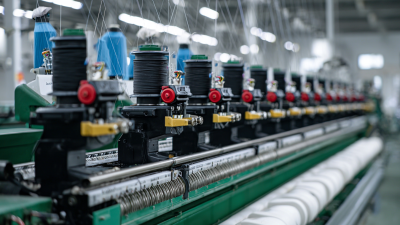
A warping machine prepares yarn for weaving by arranging many individual ends in a controlled, parallel sheet. It transfers yarn from packages on a creel to a warp beam. The beam later feeds the loom. Unlike ordinary winding, warping must maintain consistent length, spacing, and tension across hundreds or thousands of ends.

During operation, yarn travels through guides, tension devices, and a measuring system before reaching the beam. Sensors monitor breakage, speed, and uneven tension.

If one end snaps, the stop-motion system can halt the machine quickly. The operator then joins the yarn and checks the affected section.

Small errors matter. A loose end may create a streak, while excessive tension can weaken or break the yarn.

Direct warping suits many standard production runs. Sectional warping can handle patterns, smaller batches, or complex color arrangements.

Buyers should examine beam accuracy, tension control, yarn compatibility, maintenance access, and operator training.

In real mills, performance depends on humidity, package quality, yarn type, and setup discipline. The machine is precise, but not infallible.

A fast setting is not always the best setting. Experienced technicians often reduce speed slightly to protect delicate yarn and improve consistency. That practical judgment is easy to overlook when comparing only specifications.

Key Types of Warping Machines for Different Textile Applications

In 2026, global textile buyers should choose a warping machine based on yarn behavior, not catalogue promises. Direct warping machines suit large lots of similar yarn and stable production schedules. They move yarn from supply packages onto a beam with controlled tension and speed. Sectional warping machines fit smaller lots, sampling, and patterned fabrics. Their narrower sections support precise stripe and color placement. This flexibility matters when designs change frequently. Some teams underestimate setup time, though.

High-speed direct systems are common in denim, shirting, and other continuous woven fabrics. They need reliable tension control, accurate length measurement, and disciplined beam handling. For delicate filament yarns, sensitive tension feedback can reduce breaks and uneven selvages. Creel capacity also affects labor. A larger creel may reduce interruptions but requires more floor space and careful loading. Automation helps. The risk remains. Poor calibration can still create defects.

Sample rooms may prefer sectional machines because they can build short, complex arrangements without wasting long yarn runs. Technical textile mills should examine yarn friction, beam width, and winding density. High-density applications require stable pressure and consistent beam hardness. Buyers should test their own yarns before approval. A cotton demonstration may not predict results with elastane or fine polyester. No machine is perfect. Maintenance access, operator training, and spare-part availability can matter as much as rated speed. A lower output figure may be wiser when it protects quality and reduces rework.

How to Evaluate Warping Machine Manufacturers in 2026

How to Evaluate Warping Machine Manufacturers in 2026

Global fiber production reached 124 million tonnes in 2023, according to Textile Exchange’s Materials Market Report 2024. It may reach 160 million tonnes by 2030. This growth increases pressure on warping lines, especially for stable tension, low waste, and faster changeovers. However, production volume alone should not decide your supplier shortlist.

Ask manufacturers for measured data from machines using similar yarn counts and beam widths. Check running speed, tension variation, stoppage frequency, energy use, and yarn breakage rates. Request factory acceptance test records, not only sales brochures. A useful trial should include your actual yarn, package size, and planned operating pattern. Small details matter. Even operator access can affect daily output.

The ITMF International Textile Machinery Shipment Statistics provide valuable market context, but shipment figures cannot prove machine quality. Evaluate engineering depth through software support, spare-parts availability, training hours, and response times in your region. ISO 9001 certification supports process control, yet it does not guarantee reliable warping performance. I would not trust an impressive efficiency claim without test conditions. Ask whether results were recorded during continuous production or a short demonstration. A clean showroom can hide difficult maintenance realities. Include lifecycle cost calculations for electricity, creel preparation, consumables, and downtime. Also examine traceability, since Textile Exchange reports continuing pressure for more transparent textile supply chains.

Leading Warping Machine Manufacturers for Global Buyers

2026 Top Warping Machine Manufacturers for Global Buyers

Leading Warping Machine Manufacturers for Global Buyers

Global buyers are seeking warping machine manufacturers with stable engineering, responsive service, and measurable efficiency. Textile Exchange reported that global fiber production reached 124 million tonnes in 2023. This growth increases pressure on mills to reduce waste before weaving begins. Leading manufacturers now offer electronic tension control, sectional warping options, and data monitoring for production traceability.

Real factory experience still matters. A supplier should provide machine trials using the buyer’s actual yarn, speed, and beam requirements. ITMF’s International Textile Machinery Shipment Statistics remains a useful reference for tracking equipment investment and market direction. However, shipment data does not prove machine quality. That part requires careful verification. Some product claims sound impressive but remain difficult to compare.

Tips: Ask for tension uniformity results, energy figures, spare-part lead times, and operator training details. Check performance after six months, not only during installation. Request references from mills using similar yarn counts. Also review local electrical standards and maintenance skills before signing. A cheaper machine may become expensive when downtime reaches the weaving floor. My view is slightly cautious: automation helps, but poor calibration can quietly reduce its value.

Essential Machine Features, Technologies, and Performance Metrics

When evaluating 2026 warping machine manufacturers, global buyers should examine measurable performance, not polished brochures. Working width, yarn count range, and beam capacity define practical production limits. A stable tension system matters more than maximum speed. It reduces uneven packages and prevents avoidable yarn breaks.

Modern machines often combine servo drives, electronic tension sensors, automatic stop motion, and recipe-based controls. These features support repeatable settings across different yarn materials. Ask for tension variation data, average breakage rates, acceleration time, and energy use per beam. Noise level and accessible maintenance points also affect daily operating costs. In plant trials, I have found that a slightly slower machine can deliver better output when fewer stoppages occur. No machine is perfect. Data may also change with yarn quality, humidity, and operator skill.

Tips: Request a live demonstration with your own yarn. Check beam hardness from edge to center. Review spare-part availability, software training, warranty response, and remote diagnostic options. A useful acceptance test should record speed, tension stability, stoppages, and completed beam quality. Do not trust one impressive trial result. Run repeated tests, then question any unexplained variation.

2026 Top Warping Machine Manufacturers for Global Buyers - Essential Machine Features, Technologies, and Performance Metrics
Evaluation Category Machine Feature or Performance Metric Typical Commercial Specification Relevant Technology and Operational Function What Global Buyers Should Check
Production Capacity Maximum warping speed Approximately 600–1,200 m/min for high-speed sectional or direct warping systems Servo-driven beam rotation, electronic speed regulation, and synchronized yarn delivery help maintain stable production speed. Confirm the rated speed under the intended yarn type, yarn count, beam width, and production tension rather than relying only on the no-load maximum.
Working Dimensions Usable working width Common configurations range from about 1,800 mm to 3,600 mm; wider systems are available for specialized applications Modular creel, beam, and sizing-line interfaces allow the machine to support different fabric widths and production layouts. Match the width to loom requirements and allow sufficient space for selvage, beam flange, maintenance access, and future capacity changes.
Beam Handling Warp beam diameter and loading Typical beam diameters are approximately 800–1,250 mm, depending on the machine configuration Automatic beam transport, hydraulic or motorized lifting, and programmable positioning reduce manual handling and loading errors. Verify beam flange dimensions, maximum beam weight, loading direction, floor load, and compatibility with existing weaving equipment.
Yarn Compatibility Supported yarn materials Suitable systems may process polyester, nylon, cotton, viscose, blended, and technical filament yarns when correctly configured Adjustable yarn guides, ceramic or low-friction contact surfaces, and application-specific tension settings help reduce abrasion and filament damage. Request validated test results for the exact yarn material, linear density, finish, twist, package type, and required warp density.
Tension Control Warp tension consistency Advanced electronic systems commonly target tension variation within approximately ±3% under stable operating conditions Load cells, closed-loop servo control, dancer compensation, and recipe-based tension management stabilize yarn tension during acceleration and deceleration. Ask for tension-test methodology, sensor calibration intervals, response time, and performance data at both low and high machine speeds.
Process Accuracy Length and density control Electronic length measurement and programmable density control are standard features in modern industrial systems Rotary encoders, digital length counters, automatic traverse correction, and recipe storage improve repeatability between production batches. Check practical length accuracy, density adjustment resolution, data traceability, and compensation for yarn slip or beam diameter changes.
Automation Control system and operator interface PLC-based touchscreen controls with multilingual menus, alarm history, recipe storage, and production data logging Human-machine interfaces provide centralized control of speed, tension, length, alarms, setup parameters, and maintenance notifications. Confirm language support, password levels, remote diagnostics, spare-part availability, cybersecurity procedures, and operator training requirements.
Quality Monitoring Break detection and fault response Individual or sectional yarn-break sensors with automatic stop functions and visual fault indication Optical, mechanical, or electronic sensors detect yarn breaks and abnormal tension, limiting defective warp production. Evaluate detection sensitivity for fine and textured yarns, false-stop frequency, reset procedure, and fault-location accuracy.
Energy Efficiency Drive and power management Variable-frequency or servo drives with regenerative options and automatic standby functions High-efficiency motors, optimized acceleration profiles, and automatic idle-mode control reduce unnecessary electricity consumption. Request energy consumption per production length under representative operating conditions, not only installed motor power.
Reliability Continuous operating capability Industrial machines are generally designed for multi-shift operation with scheduled preventive maintenance Rigid frames, balanced rotating assemblies, protected electrical cabinets, and condition-monitoring functions support stable long-term operation. Review reference installations, uptime records, preventive-maintenance intervals, critical spare parts, and local service response time.
Safety Operator protection systems Emergency-stop circuits, guarded moving parts, access interlocks, warning lights, and safety-rated control components Safety PLCs, door interlocks, emergency braking, and controlled restart functions reduce risks during operation and maintenance. Check conformity with the destination market's machinery, electrical, electromagnetic compatibility, and workplace safety requirements.
Maintenance Serviceability and diagnostics Modular electrical architecture, accessible wear components, alarm records, and guided troubleshooting functions Remote diagnostics, digital manuals, preventive-maintenance reminders, and standardized components can shorten service interruptions. Clarify warranty coverage, technician availability, recommended spare-parts inventory, software support, and total maintenance cost.
Integration Factory connectivity Optional Ethernet connectivity, production reporting, data export, and integration with manufacturing execution systems Industrial communication protocols enable production tracking, electronic job recipes, performance analysis, and centralized equipment monitoring. Confirm supported protocols, data ownership, integration fees, network requirements, and whether offline operation remains available.
Commercial Value Total cost of ownership Determined by purchase price, installation, energy, labor, consumables, maintenance, downtime, and upgrade costs Automation and reliable tension control may reduce waste, rework, operator intervention, and unplanned stoppages over the equipment life cycle. Compare five- to ten-year ownership cost using the same production volume, labor assumptions, energy price, service terms, and expected utilization.
Specification ranges are representative industry benchmarks for commercial textile warping systems and should be verified against the selected machine configuration, yarn application, and destination-market requirements.

How to Compare Suppliers, Costs, Certifications, and After-Sales Support

Comparing a warping machine supplier requires more than checking the lowest quotation. ITMF’s 2023 International Textile Machinery Shipment Statistics showed uneven investment across major textile machinery categories and regions. This makes local service capacity especially important. Ask for three recent installations with similar yarn counts, beam widths, and production speeds. Request measured output, not only catalog ratings. A factory visit can reveal vibration, yarn tension stability, and operator access.

Separate the purchase price from the ownership cost. Compare energy use per 1,000 meters, spare-part prices, installation fees, training, and expected downtime. The IEA reports that industry consumes nearly 40% of global final energy demand, so efficiency deserves a line in the quotation. Ask suppliers to define testing conditions. Otherwise, energy figures may look precise but remain difficult to compare. Low price, wrong machine. A small tension error can create visible streaks after weaving.

Certifications should be verified, not accepted as scanned logos. Check the certificate number, issuing body, scope, and expiry date. The ISO Survey 2023 records more than one million ISO 9001 certificates worldwide, yet certification alone does not prove machine reliability. Examine electrical safety documentation, risk assessment, and factory acceptance records. After-sales support should include response times, remote diagnostics, critical spare-part lists, and technician coverage in your country. Put these terms into the contract. Warranty language is often too vague. One practical improvement is to score suppliers with the same spreadsheet, then test their answers against production references. Mistakes still happen, especially when buyers compare specifications without comparing service conditions.

YRS3-M-V Bi-Axial Warp Knitting Machine: Insights from ITMF and Grand View Research Reports

The YRS3-M-V bi-axial warp knitting machine is designed for producing reinforcement geocomposites through a one-time forming process. With E3, E6, and E9 gauges and working widths of 186 or 225 inches, it supports a broad range of industrial fabric structures while helping reduce intermediate handling and production steps. Its operating range of 50–1,200 revolutions per minute can be adjusted according to product design, yarn characteristics, and required reinforcement performance.

Market indicators support the growing importance of such equipment. Grand View Research estimates that the global technical textiles market was valued at approximately US$225.99 billion in 2022 and is projected to expand at a compound annual growth rate of about 6.2% from 2023 to 2030. Infrastructure, filtration, transportation, and construction applications are key contributors to this development, increasing demand for durable and efficiently manufactured textile reinforcements.

Data and industry discussions reported by the International Textile Machinery Federation also highlight continued investment in advanced textile machinery, particularly equipment that improves automation, productivity, and resource efficiency. In this context, the YRS3-M-V provides a practical platform for manufacturing reinforcement geocomposites used in soil stabilization, drainage systems, road construction, and other civil-engineering applications. Its bi-axial structure formation enables balanced reinforcement in multiple directions, while the configurable gauge and width options allow producers to adapt fabric specifications to different project requirements.

FAQS

What is a warping machine?

A warping machine arranges many yarn ends into a controlled, parallel sheet. It transfers yarn from a creel to a warp beam. The beam later supplies yarn to a loom.

How does the machine prepare yarn?

Yarn passes through guides, tension devices, and measuring systems. It then winds onto the beam with controlled spacing, length, and tension.

Why is tension control important?

Uneven tension can create streaks, weak sections, or yarn breaks. A loose end may look harmless, but it can disturb weaving. Small errors matter.

What happens when a yarn end breaks?

Sensors detect the break, and the stop-motion system can halt the machine. The operator joins the yarn and inspects the affected section.

What is the difference between direct and sectional warping?

Direct warping suits many standard production runs. Sectional warping supports patterns, smaller batches, and complex color arrangements.

What should buyers check before choosing a machine?

Check beam accuracy, tension control, yarn compatibility, maintenance access, and training support. Ask for trials using your actual yarn and beam requirements.

Does higher operating speed always improve production?

No. A faster setting may damage delicate yarn or reduce consistency. Experienced technicians sometimes lower speed slightly. Speed is not everything.

Which operating conditions affect performance?

Humidity, package quality, yarn type, calibration, and setup discipline all matter. Local electrical standards and maintenance skills also deserve attention.

How can buyers judge long-term machine value?

Request tension uniformity results, energy data, spare-part lead times, and operator training details. Check performance after six months, not only after installation.

Can automation eliminate operating problems?

Automation improves monitoring and control, but it cannot replace careful calibration. I may be too cautious, yet impressive specifications can hide practical weaknesses.

Conclusion

This guide explains how a Warping Machine prepares yarn by arranging and winding multiple threads onto a beam with consistent tension, spacing, and alignment. It introduces major machine types for applications such as weaving, technical textiles, and high-volume production, while highlighting how their configurations influence productivity, yarn quality, flexibility, and maintenance requirements. Readers will also learn how to assess manufacturers by examining engineering experience, customization capabilities, production capacity, quality control, and international service readiness.

The guide compares essential features and performance metrics, including operating speed, tension accuracy, beam capacity, automation, energy efficiency, safety systems, control interfaces, and changeover time. It also outlines practical methods for evaluating suppliers through total cost analysis, delivery terms, spare-parts availability, training, warranty coverage, certifications, and after-sales support. By considering both technical performance and long-term service reliability, global buyers can make informed purchasing decisions and select equipment that supports stable production, consistent fabric quality, and future business growth.

Emily

Emily

Emily is a dedicated marketing professional at DANYANG YIXUN MACHINERY CO., LTD, a leading manufacturer specializing in multiaxial and biaxial warp knitting machines, stitch bonding warp knitting machines, and towel warp knitting machines for glass fiber applications. With a profound understanding......
Previous 10 Tips to Choose the Best Reo Mesh Machine